Smarter Travel, Stronger Business: Visa outlines how Vietnamese businesses can close the expense control gap
10/30/2026
• As Vietnam’s business-travel spending is forecast to grow 13.2% in 2026, Visa highlights how connected payments, embedded controls and integrated data can help enterprises strengthen spending discipline while improving the traveller experience.
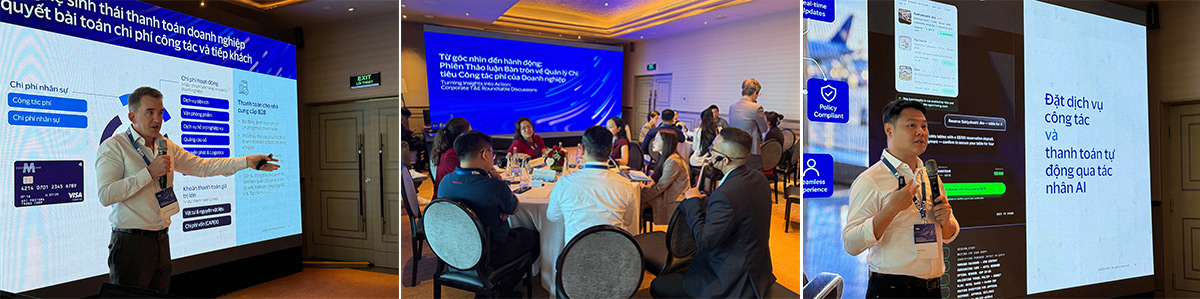
Visa (NYSE: V), a world leader in digital payments, is calling on enterprises in Vietnam to rethink corporate travel payment and expense management by shifting from retrospective reviews to controls embedded at the point of decision and payment. At the Visa Commercial Travel Forum 2026 in Ho Chi Minh City under the theme “Smarter Travel, Stronger Business”, industry leaders explored how connected payments, integrated data and effective programme design can help businesses align spending with corporate policies while supporting productivity and growth.
The challenge is not simply that business travel is becoming more expensive, but that business spending is growing faster than many organisations’ ability to monitor and manage it. Closing this gap requires more than improving reimbursement processes or strengthening post-trip audits. Businesses have an opportunity to move expense control upstream, connecting payment controls, travel policies and spending data so that spending can be managed earlier in the travel journey.
For finance leaders, the opportunity extends beyond improving expense processing. Greater connectivity between payments, policies and data can provide earlier visibility into spending, strengthen financial discipline and enable more proactive management of corporate expenditure.
The Forum’s roundtable discussions examined how enterprises can assess the business value of travel, balance global T&E standards with local requirements, and identify opportunities to automate processes while addressing foundational gaps.
The growing gap between travel spending and expense control
According to the Global Business Travel Association (GBTA), global business-travel spending is forecast to reach US$1.71 trillion in 2026, up 7.2%, while trip volume is projected to grow by just 1.3%1. Spending is therefore increasing approximately 5.5 times faster than the number of journeys and is expected to exceed US$2 trillion by 2030.
Vietnam’s business-travel spending is forecast to reach US$6.0 billion in 2026, up 13.2%—the highest projected growth rate in Southeast Asia and nearly twice the global rate. Five sectors, led by computer, electronic and optical products, as well as rubber, plastics and minerals, account for 50.2% of national business-travel spending2.
As budgets expand, fragmented payment methods and disconnected data can make it harder for enterprises to identify spending patterns, enforce policies and make timely decisions. GBTA survey data presented at the Forum shows that 46% of surveyed business travellers use personal rather than corporate cards for business trips, citing better rewards. Meanwhile, 40% say reimbursement takes too long, and 27% report long waits to receive corporate cards after approval3. These challenges can leave finance teams with incomplete spending data while adding friction for employees.
Embedding control throughout the travel journey
Forum discussions highlighted four interconnected challenges: fragmented payments, limited spending visibility before expenses are submitted, manual reporting and reimbursement, and difficulties enforcing policy compliance and expense integrity. Together, these gaps increase administrative workloads, make it harder to address exceptions early and limit finance teams’ ability to manage costs effectively.
“Business travel spending is growing much faster than the number of trips being taken, and that changes the equation for every finance leader. A post-trip audit tells a company what it has already spent, but it cannot change the outcome of that transaction. Control needs to move closer to the decision and the payment, so policies can be applied when spending is committed and finance teams have access to complete, actionable data rather than having to reconstruct it afterwards,” said Mr. Gareth Parrington, Head of Visa Commercial Solutions, Regional Southeast Asia.
To help businesses make this shift, Visa brings together commercial payment capabilities, payment controls, spend visibility and compliance solutions designed to connect payments, policies and data across the business travel journey.
These include the Visa Corporate Card, available in physical and virtual formats; the Central Travel Account (CTA), which supports payments for air and rail tickets and travel management company booking fees; and Visa Virtual Cards, which facilitates on-demand payments for infrequent and other travellers.
Complementary tools include Visa Spend Clarity, Visa Payment Controls and Visa IntelliLink Compliance Management. Visa’s data solutions can match booking information with transaction data and transmit the results to corporate reporting or accounting systems. Integration with existing expense management and procurement platforms can further reduce manual data entry and streamline workflows.
Together, these capabilities can help enterprises embed approved payment processes where spending occurs, connect payment and travel data, and identify exceptions earlier:
- Before travel: Automated, real-time card deployment within travel systems can streamline bookings and support approved payment processes.
- During travel: Centrally billed virtual card accounts can support in-trip expenses while helping companies manage travel costs.
- After travel: Consolidated booking, transaction and invoice data can support automated reconciliation and more timely reporting.
By connecting payments, policies and data, enterprises can gain a more comprehensive view of business travel spending, identify exceptions earlier and make better-informed decisions about budgets and supplier relationships. Travellers can also benefit from clearer payment processes and a more straightforward way to manage approved business expenses.
Building smarter, more connected T&E programmes
A key takeaway from the Visa Commercial Travel Forum 2026 was that stronger spending control and a better traveller experience need not be competing priorities. With effective programme design, enterprises can strengthen governance while reducing friction for employees, enabling finance teams to focus less on manual reconciliation and more on strategic financial management.
As Vietnam’s business-travel market continues to grow, enterprises have an opportunity to move beyond recording expenditure towards T&E programmes that connect policy, payments and data to support better decisions throughout the travel journey. Visa remains committed to working with enterprises, financial institutions, and travel and expense partners to help build more connected, efficient and transparent commercial payment experiences.

1 GBTA 2026 Business Travel Index, Executive Summary (August 2026).
2 GBTA 2026 Business Travel Index.
3 The 2024 GBTA BTI Outlook – Annual Global Report and Forecast. The report provides a comprehensive analysis of business travel spending and growth across 72 countries and 44 industries. The study also surveyed 4,100 business travelers across 28 major markets worldwide.
About Visa
Visa (NYSE: V) is a world leader in digital payments, facilitating transactions between consumers, sellers, financial institutions and government entities across more than 200 countries and territories. Our mission is to connect the world through the most innovative, convenient, reliable and secure payments network, enabling individuals, businesses and economies to thrive. We believe that economies that include everyone everywhere, uplift everyone everywhere and see access as foundational to the future of money movement. Learn more at Visa.com.