
The path to SMB growth
Small and medium-sized businesses (SMBs) are a strategically important growth segment for issuers across Asia Pacific. As they mature, SMBs can contribute across deposits, lending, business cards, merchant services, payroll, insurance and foreign exchange. They also tend to create deeper, longer-term banking relationships than purely transactional consumer accounts.
By the time a business becomes a mature SMB, they are already using a range of payment tools like QR codes, digital wallets and payment service providers (PSPs) offered by banks, fintechs, neobanks and digital platforms. Adding cards to the mix bolsters an SMB’s payments proposition.
Visa Accept gives issuers a way to engage earlier, when many future SMBs are still informal micro-sellers using personal banking products and not formally served as businesses. A seller activated today may begin with simple card acceptance, but over time that activity can help reveal growth patterns and emerging financial needs.
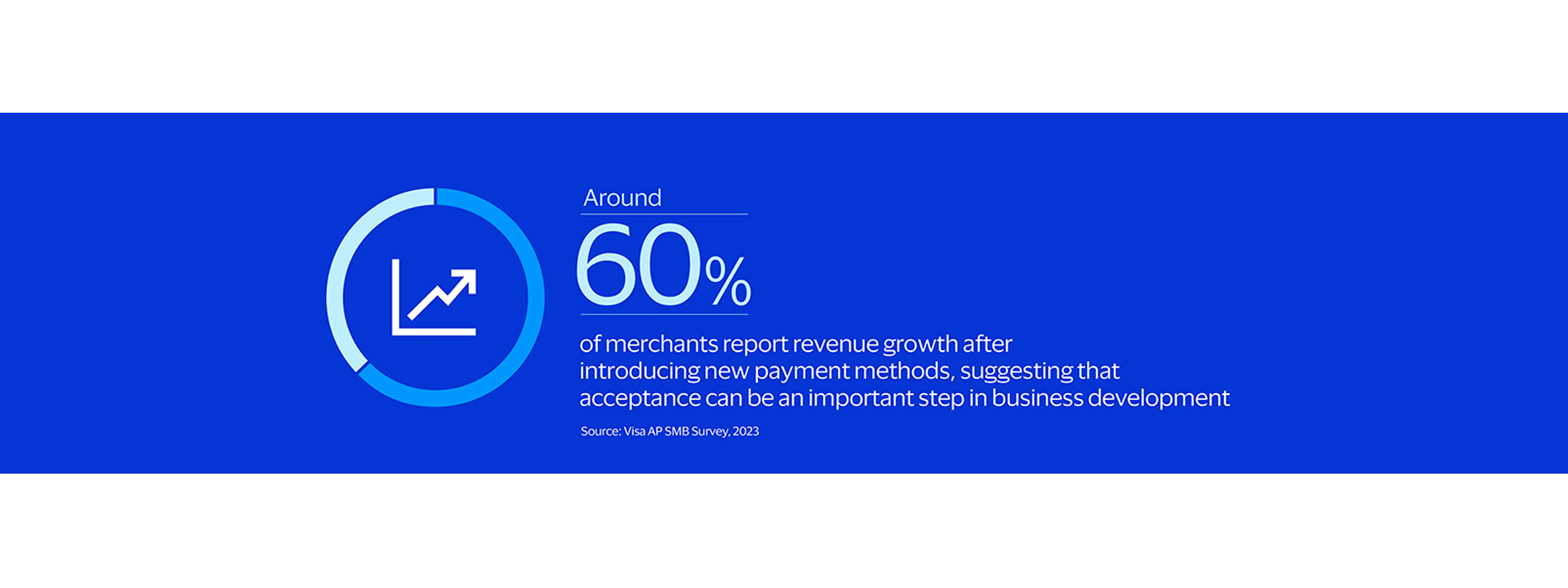
Where the SMB relationship begins
The seller lifecycle often starts before a business is formally recognised as an SMB. Across Asia Pacific, many sellers operate informally today, whether from market stalls, home businesses or social media platforms. Over time, some will formalize, register their businesses and seek banking partners that can support their next stage of growth.
This early-entry model can be particularly important for underserved entrepreneurs, including many women-owned microbusinesses, says Maria Peralta Giraldo, Director, Growth Products, at Visa Accept. She adds that these sellers may be less likely to access traditional business banking in their nascent stages, but early support with card acceptance can help them build a payment history, improve cash-flow visibility and take the next step toward formal growth.
That early support matters as sellers’ needs evolve as their businesses mature.
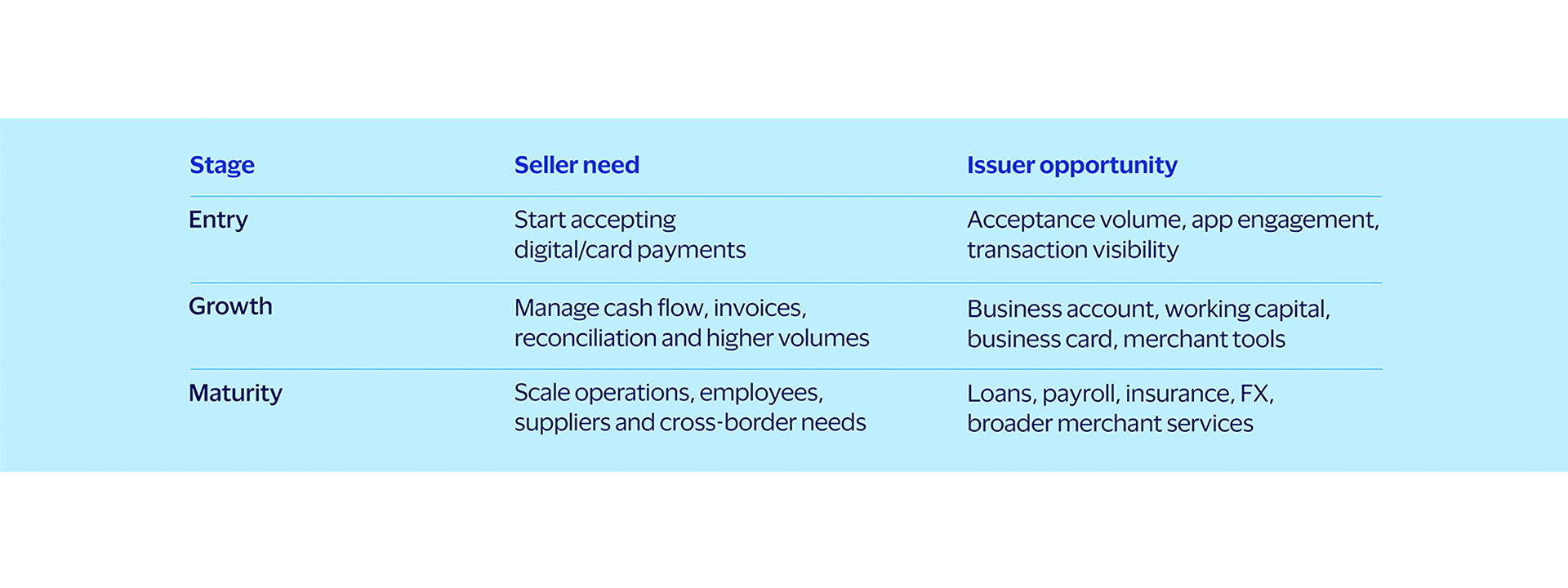
In the early stages, a personal cardholder may start selling informally, relying on cash or bank transfers to get paid. Enabling card acceptance gives that seller a more professional way to receive payments and gives the issuer a first view into emerging commercial activity.
In the growth stage, rising transaction volumes can create new needs such as cash-flow management, reconciliation, invoice tools, business accounts, working capital or a business card.
In the maturity stage, the seller may become a more formal SMB with broader financial needs, from lending and payroll to insurance, merchant services and foreign exchange. At that point, the issuer that supported the seller early is better placed to offer relevant products because it has already built trust and observed the business’s growth trajectory.
Which partner will the seller choose? The issuer that supported the business early is not guaranteed to win the relationship, but it has a meaningful advantage: existing trust, transaction insight and a record of supporting the seller from the outset.
Turning payment activity into growth insight
Visa Accept can help issuers identify growth earlier by creating visibility into seller payment behavior. Rising transaction volumes, more frequent payments, higher average ticket sizes or seasonal peaks can all indicate that a seller is moving from informal activity toward a more structured business.
Those signals can help issuers engage at the right moment with relevant support: a business account when personal finances become hard to separate, working capital when inventory needs grow, a business card when expenses become more regular, or merchant services as payment volumes increase.
This changes the SMB growth strategy. Instead of waiting until a business is mature, issuers can build the relationship while the seller is still growing.
The near-term benefit is easier acceptance. The longer-term value is the relationship, data and growth insight that acceptance can create over time.
The next generation of SMB clients may already be in issuers’ portfolios, still operating as informal sellers today. Visa Accept gives issuers a way to meet them at the beginning of the journey and build a path from first card acceptance to higher-value SMB banking relationships.
The opportunity is not only in today’s acceptance volume. It is in tomorrow’s business account, loan, card, merchant service, payroll relationship or working-capital need. Issuers that engage early will do more than gain an edge, they will be positioned to secure the relationships that define the next wave of small-business growth.